Paying 10x More After Google’s num=100 Change? Migrate to You.com in Under 10 Minutes

.webp)
Google’s removal of the num=100 parameter on September 14, 2025 created a ripple effect across every SERP API vendor. Where one API call once returned up to 100 results, it now takes 10 separate calls which multiplies costs, slows performance, and forces developers to rework their architectures.
For teams that depended on SERP APIs like SerpAPI or DataForSEO, the question is clear: what’s the fastest, most cost-effective, and stable Search API?
Test out you.com’s Search API, one endpoint for the freshest, grounded web and news data—no more juggling multiple endpoints or worrying about coverage gaps.
Why Switch Now?
- 10x cost increase → Fetching 100 results now requires 10 calls instead of one.
- Higher latency → More requests mean slower pipelines and added error handling.
- Reduced reliability → SERP APIs are tied to scraping Google, which means they can break every time Google changes the structure of its results pages.
- AI & research limitations → 10 shallow snippets aren’t enough to power RAG pipelines, AI agents, or enterprise-scale analysis.
Why you.com?
With you.com, you avoid all of these issues. We don’t depend on Google’s hidden parameters. Instead, our Web Search API is backed by our own index — built from the ground up for developers, researchers, and AI workloads.
Here’s what we offer:
- More results per call → Up to 100 results returned per call at a significantly lower cost.
- Stable access → An API you can count on — no surprise caps, no unexpected downtime, and no sudden breakages.
- Highly accurate, AI-ready data → Instead of one, data-light snippet, we provide multiple snippets based on the webpage contents with citations that plug directly into RAG pipelines, AI agents, and research workflows.
- Enterprise-grade security → Zero data retention, strong privacy controls, and compliance built in.
In short, you.com delivers results that are deeper, more reliable, and built to support the future of AI — not just yesterday’s search.
Migrate from SERP to You.com in Three Steps
You don’t need to overhaul your stack to switch. Here’s how you can get up and running in less than 10 minutes with you.com.
Step 1: Get an API Key at you.com/platform
- Sign up for a free trial of the Search API, which includes 1,000 calls and scale up as you need.
- If you need more calls than what are in the Trial, Explorer, and Discoverer plans, and are looking to scale your Search needs, reach out to us to discuss our ‘Enterprise Plan’.
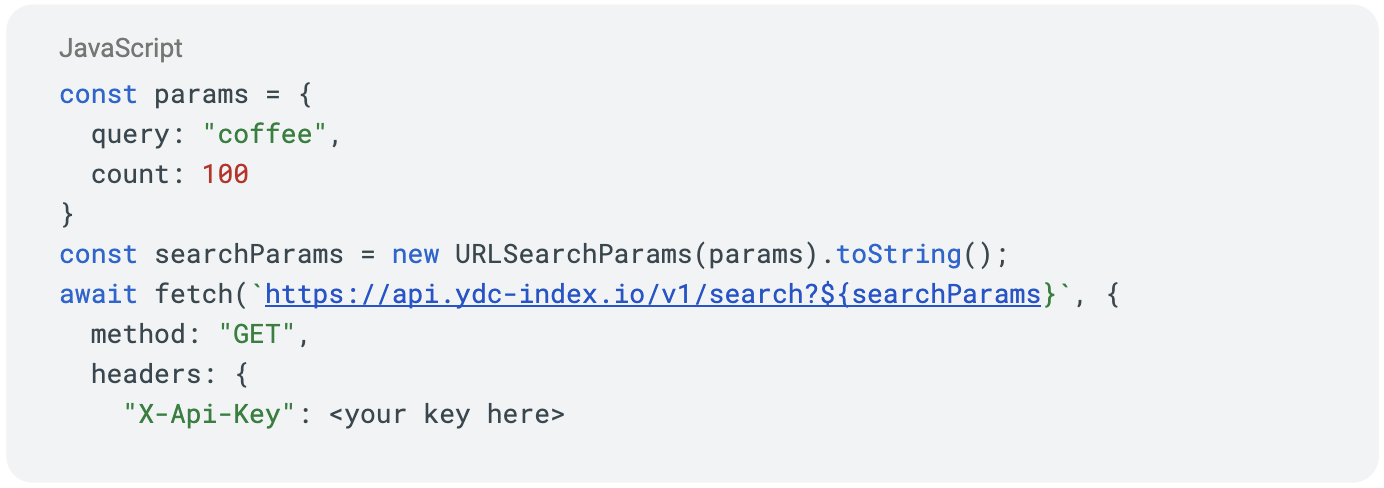
Step 2: Replace Your SERP Endpoint
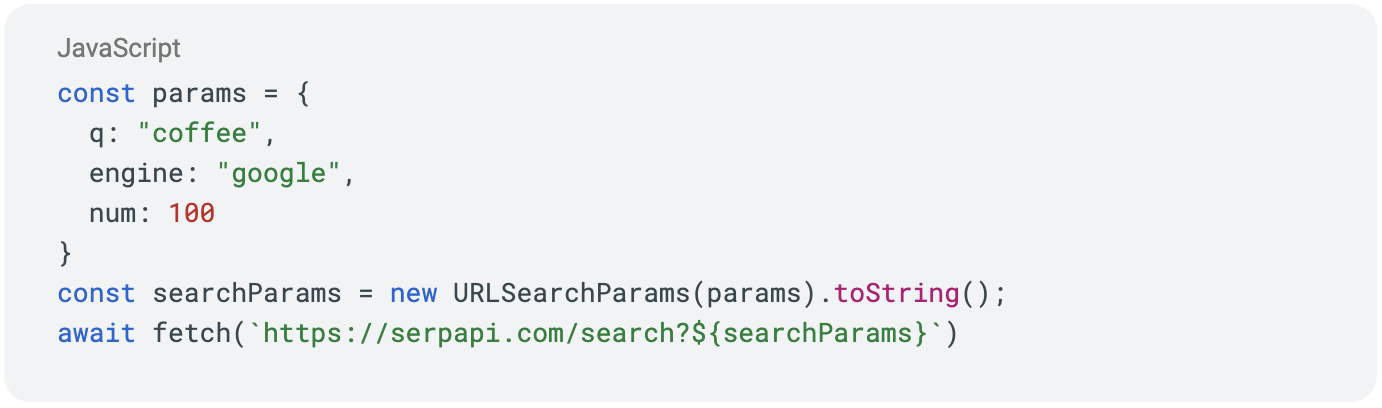
Find all instances where you are using your current SERP API provider.
Example code highlighted below:
Replace it with a call to the you.com Search API:
Step 3: Test With Your Workload
In most cases, developers are able to complete the switch in a single working session.
Start Building Now
Don’t let the loss of num=100 stall your workflows or inflate your costs. You can migrate to You.com’s Web Search API in under 10 minutes and future-proof your stack against scraping-based disruptions.
Subscribe to get a free trial of the Search API including 1,000 calls.
LI Test
LI Test
Share Article:
Related resources.
.png)
How APIs Became the Connective Tissue of LLMs
May 20, 2026
Blog
.png)
Context Rot Is Quietly Breaking Your API Integrations
May 1, 2026
Blog

What Is a SERP API? Architecture, Limitations, and Why the Market Is Shifting
April 30, 2026
Blog
.png)
When a Simple Search Isn't Enough: Building With the Research API
March 23, 2026
Blog
.jpg)