This article is based on an interview originally published by EO Global on January 22, 2026.
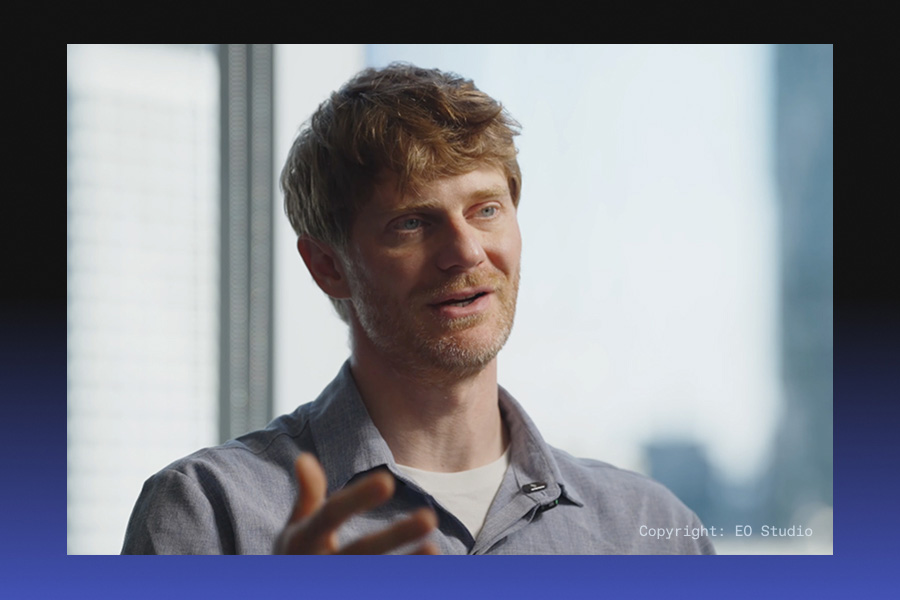
What does it take to build a unicorn AI search company from scratch—especially when the world tells you it’s impossible? In a recent EO interview, You.com Co-Founder and CEO and prompt engineering pioneer Richard Socher shares his journey from academia to industry leader, and why he believes the next wave of AI breakthroughs will come from those who dare to think differently.
Below, we capture the key themes and insights from this inspiring conversation. Be sure to watch the full interview for the complete story in Richard’s own words.
Blending Science & Entrepreneurship
Socher’s journey is deeply personal. A native of Germany, he combined his love for languages and mathematics into a path that would eventually bridge the worlds of linguistics, computer science, and AI. As Richard puts it, “Math and languages don't intersect often, right? It's very different fields of study, but they do intersect in a computer where you try to use math to understand language. And so I ended up deciding to study linguistic computer science in 2003.”
Despite doubts—including those from his own family—he followed what he found meaningful, not what was popular or obvious.
Scaling Impact: From Academia to Industry
After bringing neural networks into the field of natural language processing (NLP) at Stanford, Socher realized that scaling AI’s impact required moving out of academia and into the real world. His first company, Metamind, made training neural networks accessible, and its acquisition by Salesforce supercharged the impact of his work.
But Socher wasn’t satisfied with just research or intangible, amorphous research concepts. He wanted to put AI into people’s hands—to make search answer-driven, not just a list of blue links. That vision became reality when You.com became the first to integrate a language model directly into a search engine, years before similar moves by Google and others.
From Rejected Papers to AI Unicorn
Richard’s story begins in 2010, when the idea of using neural networks for natural language processing (NLP) was met with widespread skepticism—even hostility. “Most of my papers got rejected because people hated neural nets for NLP,” he recalls. Yet, Socher persisted, guided not by trends but by a belief in what was meaningful and grounded in principles.
This conviction led to a breakthrough collaboration. While at Salesforce in 2018, Socher (then-Chief Scientist) and Bryan McCann (then-Lead Researcher, NLP) published “The Natural Language Decathlon," which introduced prompt engineering and proved a single model could handle multiple language tasks. This now-foundational concept in AI began as an outlier and has since been cited by leaders at OpenAI.
When Socher and McCann launched You.com in 2020, industry consensus was that “search is dead.” But they saw a unique opportunity: leveraging AI to make search engines not just smarter, but meaningfully more accurate and useful.
“We started You.com because it had to be a new company to really have an impact and become a better way of finding information online. Eventually, we became the first to put a language model into a search engine,” Socher explains. Their mission? Solve the problem of hallucination in large language models (LLMs) by grounding them with robust, real-time search.
Richard continued, “I think the biggest thing for us was the pivot into enterprise. That was a really good focus. A lot of folks now realize they need AI, but only the experts realize that, in order to make AI accurate and not hallucinate, you actually need a good search infrastructure to inform that language model. So, we built that infrastructure layer because we've been at it since 2022.”
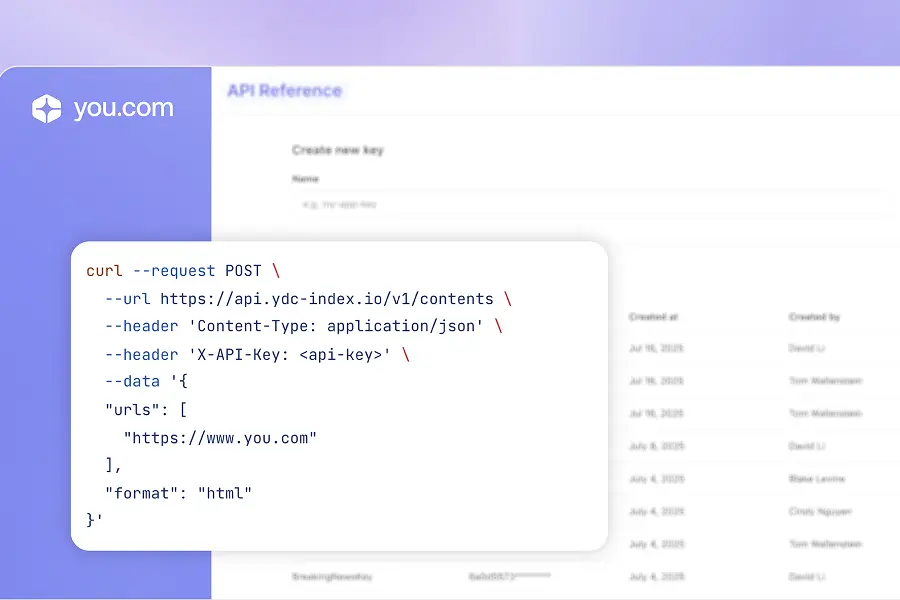
Giants like OpenAI, Amazon, and Alibaba now use You.com’s API to power their own products with up-to-date, verifiable answers.
On AI Hype, Progress, and the Future
Richard is both a realist and an optimist about AI’s future. He cautions against hype around superintelligence but believes in accelerating progress—quickly, but thoughtfully. Small, continuous improvements, he says, are the true markers of success.
His motto: “Better, better, never done.”
Richard’s story is a testament to the power of conviction, first-principles thinking, and relentless curiosity. For anyone interested in the future of AI, entrepreneurship, or the intersection of technology and human language, this interview is a must-watch.
If you're looking for more AI insights from the You.com Co-Founders, Richard and Bryan recently shared their 2026 AI predictions. Don't miss out, download the report.

.webp)





.png)