News & Press
 / 
Company
April 2, 2026

What Does It Actually Take to Build AI That Works? Richard Socher Has Some Answers

A person with short wavy hair stands smiling with arms crossed against a wooden fence, wearing a blue shirt and a smartwatch.
Share
  1. LI Test

  2. LI Test

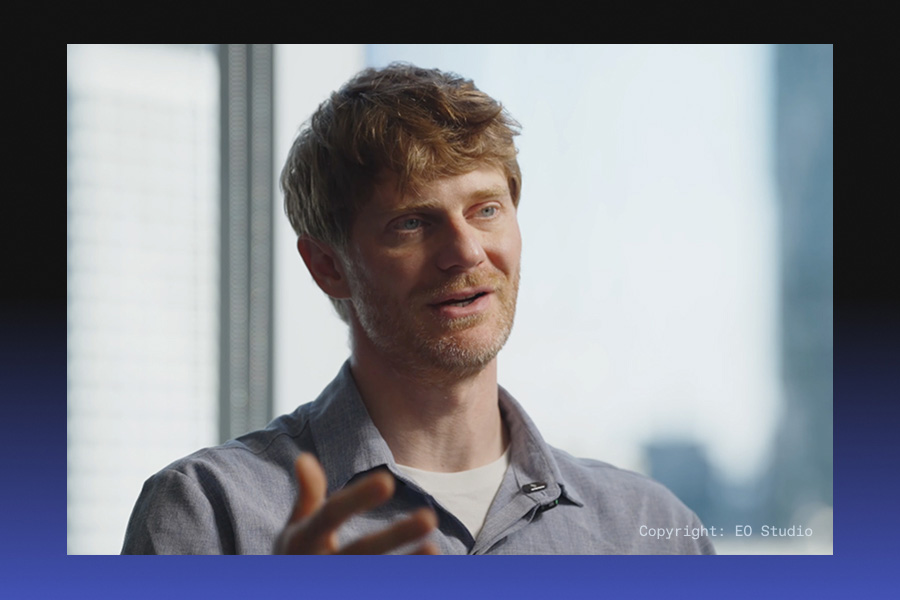
Richard Socher, founder and CEO of You.com, sat down for a wide-ranging Q&A with Thought Economics on March 27, 2026. Read the full interview.

Richard Socher has been at the frontier of artificial intelligence longer than most—and has gotten there faster by being willing to be wrong in public. As a PhD student at Stanford, he championed neural networks for natural language processing at a time when the field was deeply skeptical. His early papers were rejected. His ideas were called far-fetched. Then Alec Radford and Ilya Sutskever cited his work in the early GPT papers, and the rest, as they say, is history.

Richard went on to invent widely-used word and contextual vector representations, pioneer the concept of prompt engineering, and serve as Chief Scientist at Salesforce after the company acquired his startup MetaMind. He then founded You.com—the first platform to integrate a large language model directly into a search engine—before the world had even heard of ChatGPT.

In a new interview with Thought Economics, Richard traces that intellectual journey in refreshingly direct terms. He explains why the leap from feature engineering to architecture engineering to prompt engineering wasn't a series of breakthroughs so much as a series of realizations that humans were still doing too much of the work. 

The interview also covers ground that's harder to find in most AI conversations: a genuine rethinking of the superintelligence safety debate. Richard argues that the dominant "P(doom)" framing contains a strange internal contradiction. It imagines an AI simultaneously intelligent enough to destroy humanity, but not intelligent enough to understand why that would be counterproductive. His alternative framing is worth reading carefully.

And then there's what he calls constructive optimism—the idea that technology, applied with agency, remains humanity's most reliable tool for progress. He draws a straight line from automated textile production to Uber to AI personal assistants, and makes the case that the goods and services currently available only to the very wealthy are exactly where you should look to understand where technology takes everyone next.

The full conversation covers the origin story of You.com, why enterprise accuracy matters more than consumer vibes, how to define intelligence as a multi-dimensional volume rather than a single threshold, and what the Luddites can teach us about managing the human cost of technological transitions.

It's one of the more intellectually honest AI interviews you'll read this year.

Featured resources.

All resources.

Browse our complete collection of tools, guides, and expert insights — helping your team turn AI into ROI.

Black you.com cover reading “What Is AI Grounding and How Does It Work?” above a blue geometric pattern on a gradient purple background.
AI 101

What Is AI Grounding and How Does it Work?

Brooke Grief

Head of Content

January 26, 2026

Guides

Book cover titled “AI Predictions for 2026” with gradient background, text blocks showing names, and two men pictured speaking onstage in small photo panels.
Company

2026 AI Predictions: Insights from You.com Co-Founders

Richard Socher

You.com Co-Founder & CEO

January 23, 2026

Guides

Light blue graphic with the text ‘What Is MCP?’ on the left and simple outlined geometric shapes, including nested diamonds and a partial circle, on the right.
API Management & Evolution

What Is Model Context Protocol (MCP)?

Edward Irby

Senior Software Engineer

January 22, 2026

Blog

Graphic with the text ‘What are Vertical Indexes?’ beside simple burgundy line art showing stacked diamond shapes and geometric elements on a light background.
AI Agents & Custom Indexes

What the Heck Are Vertical Search Indexes?

Oleg Trygub

Senior AI Engineer

January 20, 2026

Blog

A flowchart showing a looped process: Goal → Context → Plan, curving into Action → Evaluate, with arrows indicating continuous iteration.
AI Agents & Custom Indexes

The Agent Loop: How AI Agents Actually Work (and How to Build One)

Mariane Bekker

Head of Developer Relations

January 16, 2026

Blog

A speaker with light hair and glasses gestures while talking on a panel at the World Economic Forum, with the you.com logo shown in the corner of the image.
AI 101

Before Superintelligent AI Can Solve Major Challenges, We Need to Define What 'Solved' Means

Richard Socher

You.com Co-Founder & CEO

January 14, 2026

News & Press

Stacked white cubes on gradient background with tiny squares.
AI Search Infrastructure

AI Search Infrastructure: The Foundation for Tomorrow’s Intelligent Applications

Brooke Grief

Head of Content

January 9, 2026

Blog

Cover of the You.com whitepaper titled "How We Evaluate AI Search for the Agentic Era," with the text "Exclusive Ungated Sneak Peek" on a blue background.
Comparisons, Evals & Alternatives

How to Evaluate AI Search in the Agentic Era: A Sneak Peek 

Zairah Mustahsan

Staff Data Scientist

January 8, 2026

Blog