
Share
LI Test
LI Test
Featured resources.

Context Window: Meaning and Optimization Tips
May 26, 2026
Blog
What Is Semi Structured Data: A Developer's Guide
May 4, 2026
Blog
.png)
All resources.
Browse our complete collection of tools, guides, and expert insights — helping your team turn AI into ROI.

AI Agents & Custom Indexes
Celebrating 50,000 Custom Agents Made on you.com
January 26, 2025
Blog
.png)
Company
You.com founder Richard Socher's plan to win the AI search wars
December 6, 2024
News & Press

AI Search Infrastructure
How Mimecast Uses You.com to Drive GTM Productivity
November 26, 2024
Case Studies
Company
These AI-assisted innovations are from startups that are less than five years old
November 19, 2024
News & Press

AI Agents & Custom Indexes
Inside the First Advanced Research & Reasoning System for LLMs: How You.com Built an AI That Thinks Like a Research Analyst
November 12, 2024
Blog
Company
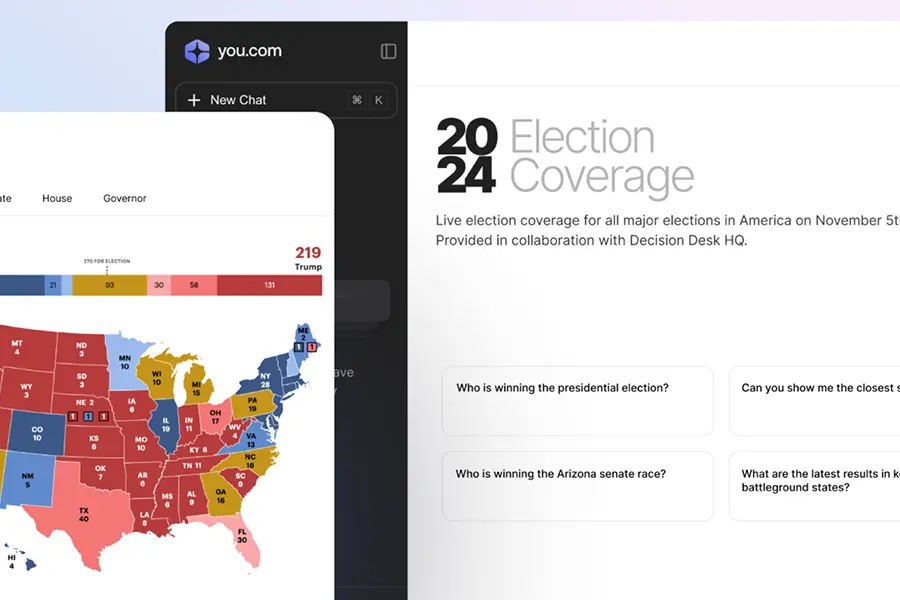
You.com and TollBit Launch First AI Election Agent with Real-Time Results
November 5, 2024
News & Press
AI Agents & Custom Indexes
You.com and TollBit Launch First AI Election Agent with Real-Time Results
November 5, 2024
Case Studies

Company
You.com Partners with German Press Agency (dpa) for Agentic AI News Discovery and Curation
October 17, 2024
News & Press