April 14, 2026
Governing AI Isn't Optional Anymore—and the Fix Starts at the Infrastructure Layer


Share
LI Test
LI Test
Featured resources.
.webp)
Paying 10x More After Google’s num=100 Change? Migrate to You.com in Under 10 Minutes
September 18, 2025
Blog
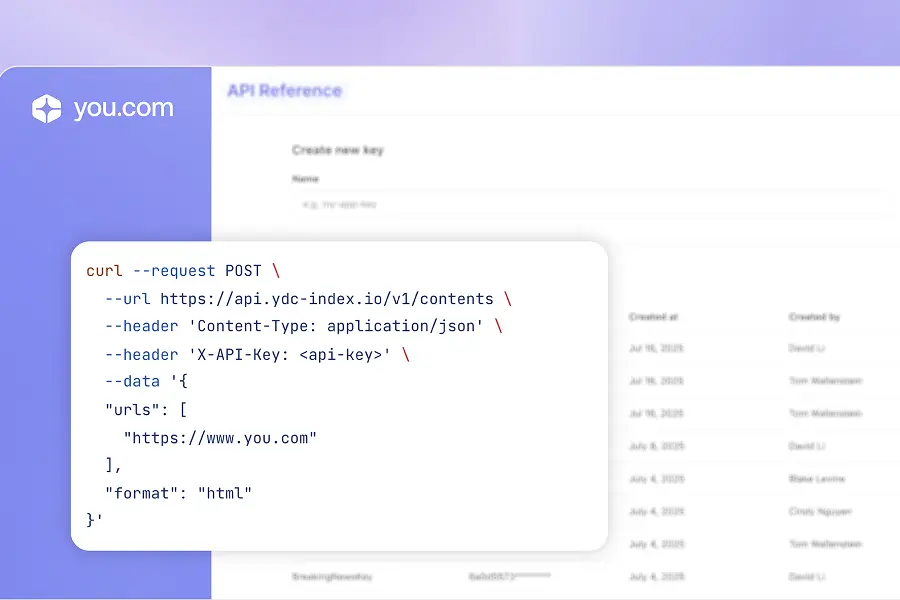
September 2025 API Roundup: Introducing Express & Contents APIs
September 16, 2025
Blog
You.com vs. Microsoft Copilot: How They Compare for Enterprise Teams
September 10, 2025
Blog
All resources.
Browse our complete collection of tools, guides, and expert insights — helping your team turn AI into ROI.

Company
Nvidia, DuckDuckGo Back AI Search Startup You.com
September 4, 2024
News & Press

Company
With $50 million in new funding, You.com thinks its AI can beat Google on hard questions
September 4, 2024
News & Press

Company
AI Agents From You.Com Aim To Boost Enterprise Productivity
September 4, 2024
News & Press

Company
AI startup You.com raises $50 million, predicts ‘more AI agents than people’ by 2025
September 4, 2024
News & Press

Company
You.com raises $50 million to make knowledge workers more productive
September 4, 2024
News & Press

Company
You.com wants to be your AI search engine for complex work queries
August 22, 2024
News & Press

Future-Proofing & Change Management
Access the most powerful AI models in one place on you.com
July 29, 2024
Blog