News & Press
 / 
Company
April 2, 2026

What Does It Actually Take to Build AI That Works? Richard Socher Has Some Answers

A person with short wavy hair stands smiling with arms crossed against a wooden fence, wearing a blue shirt and a smartwatch.
Share
  1. LI Test

  2. LI Test

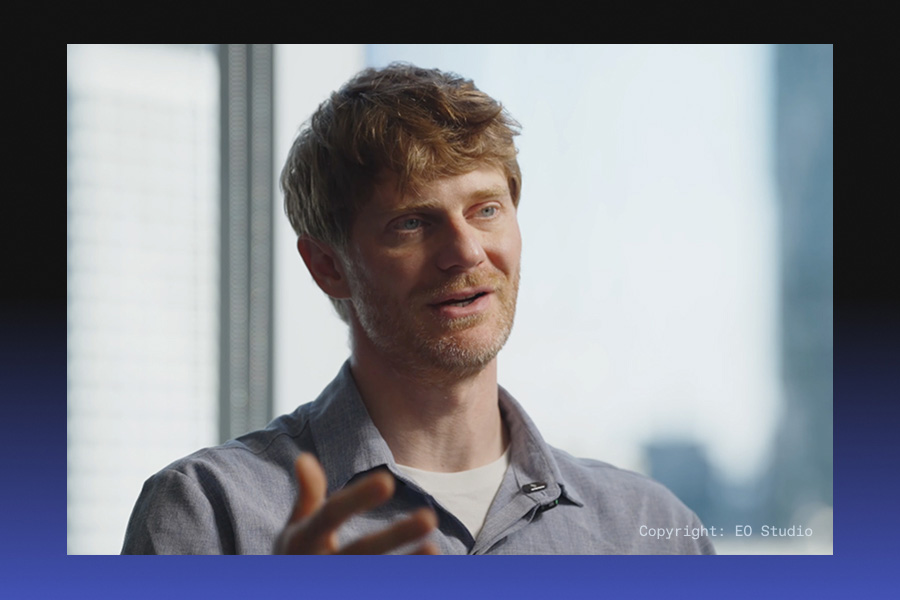
Richard Socher, founder and CEO of You.com, sat down for a wide-ranging Q&A with Thought Economics on March 27, 2026. Read the full interview.

Richard Socher has been at the frontier of artificial intelligence longer than most—and has gotten there faster by being willing to be wrong in public. As a PhD student at Stanford, he championed neural networks for natural language processing at a time when the field was deeply skeptical. His early papers were rejected. His ideas were called far-fetched. Then Alec Radford and Ilya Sutskever cited his work in the early GPT papers, and the rest, as they say, is history.

Richard went on to invent widely-used word and contextual vector representations, pioneer the concept of prompt engineering, and serve as Chief Scientist at Salesforce after the company acquired his startup MetaMind. He then founded You.com—the first platform to integrate a large language model directly into a search engine—before the world had even heard of ChatGPT.

In a new interview with Thought Economics, Richard traces that intellectual journey in refreshingly direct terms. He explains why the leap from feature engineering to architecture engineering to prompt engineering wasn't a series of breakthroughs so much as a series of realizations that humans were still doing too much of the work. 

The interview also covers ground that's harder to find in most AI conversations: a genuine rethinking of the superintelligence safety debate. Richard argues that the dominant "P(doom)" framing contains a strange internal contradiction. It imagines an AI simultaneously intelligent enough to destroy humanity, but not intelligent enough to understand why that would be counterproductive. His alternative framing is worth reading carefully.

And then there's what he calls constructive optimism—the idea that technology, applied with agency, remains humanity's most reliable tool for progress. He draws a straight line from automated textile production to Uber to AI personal assistants, and makes the case that the goods and services currently available only to the very wealthy are exactly where you should look to understand where technology takes everyone next.

The full conversation covers the origin story of You.com, why enterprise accuracy matters more than consumer vibes, how to define intelligence as a multi-dimensional volume rather than a single threshold, and what the Luddites can teach us about managing the human cost of technological transitions.

It's one of the more intellectually honest AI interviews you'll read this year.

Featured resources.

All resources.

Browse our complete collection of tools, guides, and expert insights — helping your team turn AI into ROI.
Rag & Grounding AI

AI Hallucinations 101: Understanding the Challenge and How to Get Trusted Search Results

You.com Team

May 1, 2025

Blog

AI Agents & Custom Indexes

You.com at IJF 2025 Recap: How AI Is Transforming Journalism

You.com Team

April 28, 2025

Blog

AI Search Infrastructure

5 Game-Changing you.com Features You Need to Try Today

You.com Team

April 16, 2025

Blog

Product Updates

You.com Live News API: The Ultimate Solution for Real-Time News Integration

You.com Team

April 9, 2025

Blog

Comparisons, Evals & Alternatives

ARI vs. ChatGPT Deep Research vs. Google Deep Research: Why Businesses Are Choosing ARI

You.com Team

March 17, 2025

Blog

Product Updates

Introducing ARI: The First Professional-Grade Research Agent for Business

You.com Team

February 27, 2025

Blog

Company

You.com and Inversity Launch the First-Ever Personalized GenAI Training Program: Get Certified Today

You.com Team

February 19, 2025

Blog

AI 101

Generative AI 101: Key Benefits for Companies Today and How to Get Started

You.com Team

February 13, 2025

Blog